
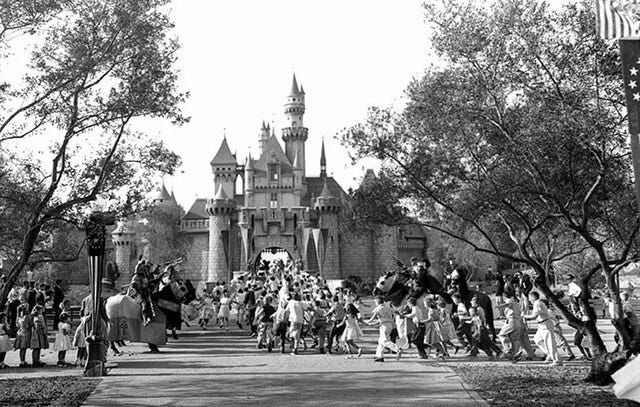
My parents met working at Disneyland. Turns out, hospitality runs in my blood.
Hospitality is an art. But it’s also bigger than that. It’s a way of seeing the world as a place not just of transactions, but of people.
When it comes to business, that makes all the difference.
To do hospitality right, you need to know the rules.
Rule 1: Anticipate People’s Needs, Before They Even Articulate Them
Let’s start with my parents.
Back in the 80s, my mom taught hospitality classes at the Disneyland Hotel.
I used to tell people I could see Disneyland from my bedroom window. That wasn’t quite true. I couldn’t see any rides, but I could see the hotel. And I got a free fireworks show every night. So, close enough.
One day, for the first time ever, after my mom finished teaching her three-hour class on hospitality, one of the trainees brought her a glass of water.
That was my dad.
See, one thing my dad is really good at is anticipating people’s needs.
He remembers details about people, like their favorite foods, books, or other interests. Before email, he used to mail people articles they’d find interesting. He’s bought my friend Jon multiple thrift store books about the mafia because one time Jon said he wanted to learn more.
I remember one time I ordered pizza for me and my friend Joseph. I added cheesy breadsticks on the side, his favorite. He asked how I knew.
I said, “You mentioned it once, a few years ago.”
To me, it wasn’t weird. That’s just how I was raised.
And that’s one of the first rules of building a business that actually feels human.
Anticipate the customers’ needs, before they even articulate them.
Rule 2: Get to Know Your Customers, So You Can Make Their Experience Memorable
Sometimes what customers need isn’t what they order. It’s the experience they came for.
One of the best lessons about hospitality came from a TV show. Or, so I thought.
The Bear tells the story of a young, well-trained chef turning his family’s humble Chicago beef sandwich shop into a fine dining restaurant. In my favorite episode, the head chef sends his main problem employee, Richie, to intern at another restaurant. There he finds his true calling: running the front of house and making people happy.
In one scene, Richie finds out a family missed trying Chicago deep dish, so he goes out and buys them a pizza. The staff transform it into a culinary wonder and serve it to the delighted family.
Turns out, it’s actually a retelling of a true story.
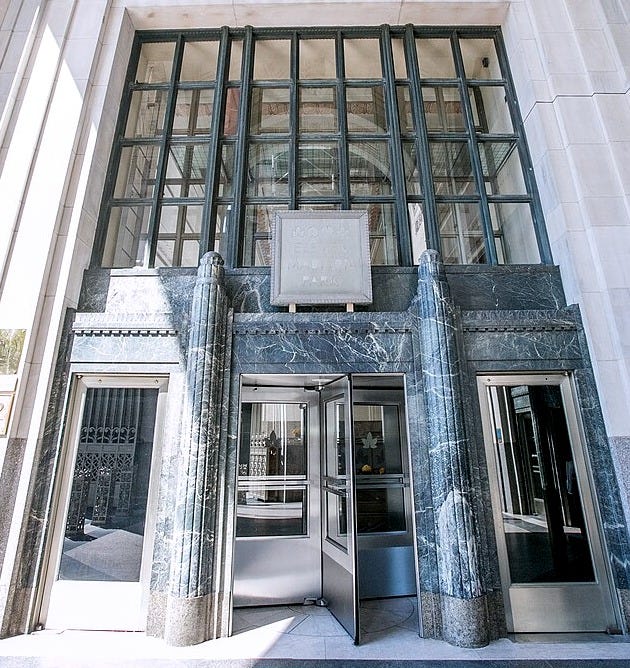
In his book Unreasonable Hospitality, Will Guidara (restaurateur and protege of Danny Meyer) describes a similar moment about serving a family who was leaving NYC to their home overseas.
The father was lamenting the fact that he’d forgotten to try an authentic NY hotdog. You know… the slightly sketchy dirty water dogs you can get on most street corners in midtown.
Funny thing to be lamenting in an upscale restaurant. But it wasn’t about the food. It was about missing part of the NY experience.
So, Guidara had his team go out and buy hotdogs and they served them up exactly how Richie serves up the pizza in The Bear.
Sometimes truth is stranger than fiction.
Guidara became obsessed with hospitality after his restaurant Eleven Madison Park was ranked #50 out of the top 50 restaurants in the world at a prestigious awards ceremony. An honor, but still somewhat humiliating.
He knew he had to turn things around. Not with the best chefs in the world. Not with money. With a strategy. He called it “Unreasonable Hospitality.”
Now Eleven Madison Park has 3 Michelin stars. Not just because of what they serve, but because of how they treat people.
Before every guest comes to the restaurant, the staff stalk them on social media to find out what they look like, so that no one walks into the restaurant and feels unknown or unwelcome. They find out if the guest has a special occasion like an anniversary, or if they’ve been saving up for months for this meal.
One time, they even found out a couple had a falling out with their families the day of their wedding. So their reception got cancelled.
Guidara and his staff transformed the restaurant into a wedding venue and threw an after-hours party with all the staff and the happy couple.
Unreasonable. Memorable.
Rule 3: Pay Attention to Detail
Good memories are built on the details. When something goes well, the details often go unnoticed. It’s only when something goes wrong that people start to see.
Kind of like when you walk into a dirty bathroom.
When I was a senior in college, I had two main jobs. One was working for the Director of Distance Learning. This got me a job at an online education startup.
My other job was working custodial. Slightly less prestigious.
I cleaned toilets, vacuumed, mopped, and collected trash every day for an entire summer and then on Saturday mornings during the school year.
To this day, I hate using public bathrooms because 1) I know how hard they are to clean, and 2) I know all the ways most people don’t do it correctly.
I’ll spare you the details.
Surprisingly, that job cleaning toilets got me my very first job after college, working as a hotel doorman. During the interview, they asked how my past experience related to hospitality.
I didn’t know what to say at first, but I’m pretty good at thinking on the fly.
I remember saying, “Being a hotel doorman is a bit like being a custodial worker.”
You could feel their eyebrows raise.
I continued, “No one really notices a bathroom unless it’s dirty. In the same way, no one really pays attention to a hotel lobby experience until they have a bad one. When someone doesn’t open the door for you, doesn’t smile at you, or doesn’t make you feel welcome, that’s like going into a dirty bathroom.
The goal is to make the experience so good for customers, no one even thinks about it. Just like how you don’t think about a bathroom when it’s clean.”
Apparently, the hotel staff liked my answer, because I spent the next 4 months working there.
I opened doors, carried suitcases, parked cars, and drove guests to the airport. I even parked a $400,000 Rolls Royce. I’ve never been more nervous behind the wheel of a car.
Turns out, in the end, my interview answer was exactly right.
Details make or break the customer experience.
Push a cart the wrong way and it jams against your foot (or the hotel guest’s!). Open the door the wrong way and it looks awkward. Don’t smile, and you don’t get a tip.
Find a way to relate to every single person.
Rack your brain for facts about movies, music, politics, and education so you can always connect with people. Learn the route to the airport. Call down to the hotel lobby to get a new keycard set up when the guest’s door won’t open.
Think hospitality is easy?
Only if you do it wrong.
Every detail matters.
Rule 4: Build Systems, Not Moments
Memorable details only work if there’s a system. Otherwise the customer experience is inconsistent. And no company builds systems quite like Disney.
First, Disney builds hospitality into its physical structures.
There’s a trashcan every 30 feet to ensure cleanliness. They literally measured how far people will carry trash before throwing it on the ground. As another example, the park itself has an entrance that narrows to draw you in. Upon exit, the same path feels short and wide, so guests feel less tired walking to their cars.
Second, Disney instills hospitality into all its employees.
Each employee is a “cast member.” Being in the presence of customers is being “on stage.” No matter what happens backstage, anything in front of customers is a performance.
What does this look like? As one example, costumed characters like Mickey Mouse aren’t allowed to break a hug with a child first. Otherwise, that feels like rejection. And what kid wants to be rejected by Mickey Mouse?
Disney also trains its staff that there are no dumb questions. The book Be Our Guest by the Disney Institute uses the example of the 3:00 parade.
It’s hard not to laugh when a customer asks “What time does the 3:00 parade start?”
But Disney employees are trained to never make a customer feel dumb.
It doesn’t take much imagination to think of the backstory. This family woke up early, spent hundreds of dollars to be here, and has walked miles in 80-degree weather.
So when a customer asks, “When does the 3:00 parade start?”, it might actually mean…
“My kids are on the verge of tears, and my feet hurt. How long do I have to find a good place to sit? Do you guys actually start on time? Once the parade starts, will I get stuck on this side of the park?
Hmm… not such a dumb question after all. And Disney trains for this.
The restaurant industry provides another solid example of hospitality as a system. Danny Meyer, Will Guidara’s mentor, has opened several Michelin-level restaurants in NYC.
But you might know him from his more casual dining option: Shake Shack.
Shake Shack is famous for making its managers work at each restaurant station during training, and managers often work at least one of the stations during each shift.
I first read about this rule when I was 22 and managing an online education startup. It’s why I made all of my staff answer customer service phone calls, no matter how unrelated it seemed to their job.
How can you make decisions about curriculum, teacher bonuses, and software if you don’t talk to students and parents about what they actually want?
You can’t build a good hospitality system without living through the details yourself first.
Rule 5: Make the Ordinary Moments Surprising and Fun
It’s not enough to make everything consistently clean and pleasant. Sometimes, it pays to be surprising, 20% weird, and a little fun.
One time, I waited an hour outside a restaurant in the cold December air. Then, I even had to wait another hour at the bar. Finally, I got to eat.
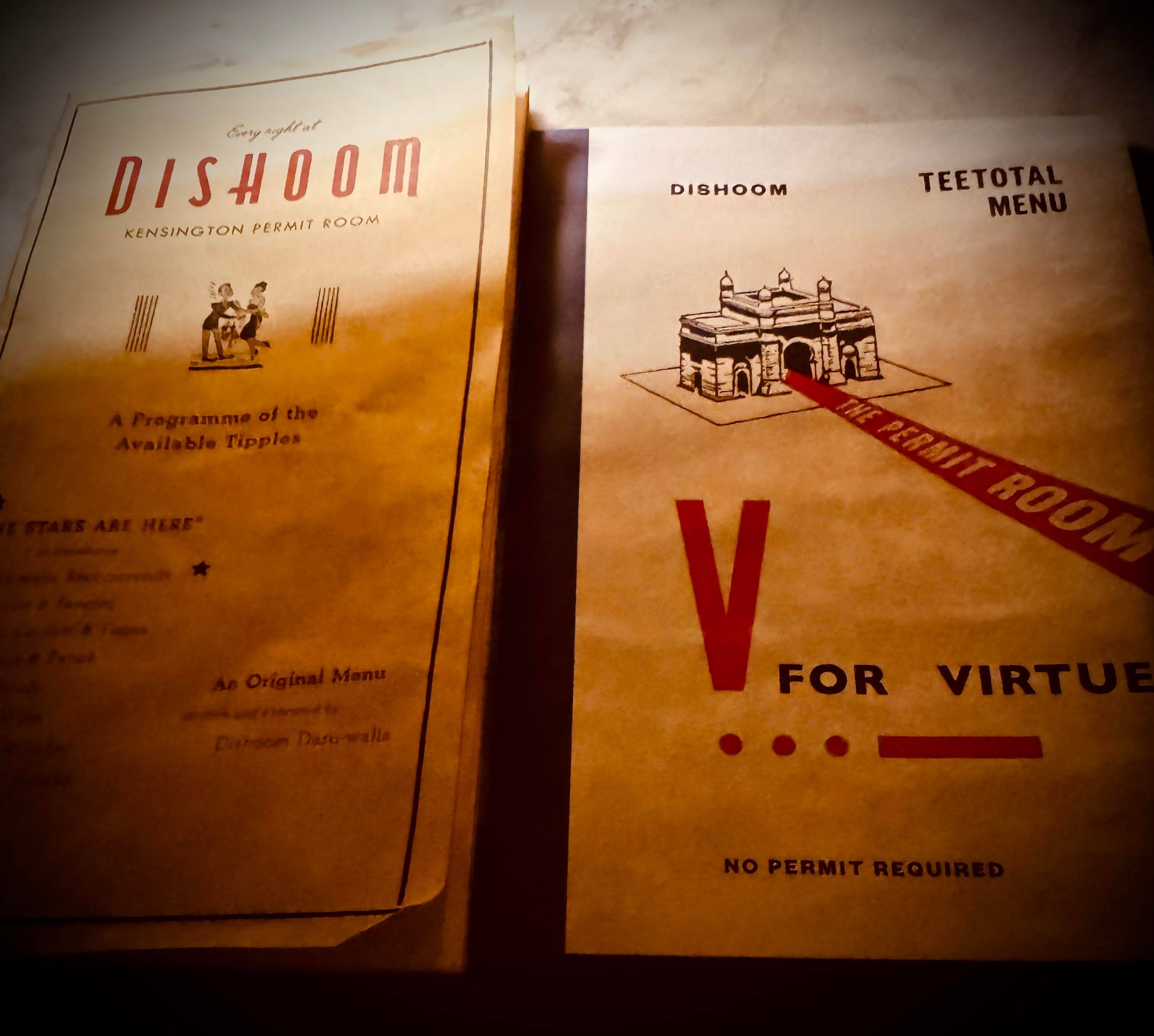
The restaurant was called Dishoom.
If you don’t know, it’s one of the most famous restaurants in London, and it’s some of the best Indian food you’ll ever eat. (Shoutout to my mom’s friend Debbie Harpe for recommending it!)
They don’t take reservations. They don’t let you put in a phone number and walk away. You wait. Or you don’t eat.
This may not strike you as the most hospitable. But here’s where it gets cool.
At the bar, they have a full alcoholic menu. It’s pretty detailed and has a lot of unique drinks. What’s more unique though… is they have a full non-alcoholic menu too.
Why? Many Indians are sober for religious and cultural reasons. Dishoom’s menu specifically is a nod to Bombay’s (now Mumbai’s) historic ban on alcoholic, which led to the invention of many creative non-alcoholic drinks.
Want to be inclusive? Don’t make people feel weird about being sober.
Design a menu for sober people that’s so fun, long, detailed, and unique, that people drinking alcoholic drinks might actually feel jealous.
Now that’s what I call hospitality.
Another thing they do involves dice. It’s called the Matka game.
Unfortunately, I didn’t get to see this, but I learned about it from Rory Sutherland. (If you’ve ever read anything I’ve written, you’ll know that I think Rory is the marketing G.O.A.T.).
They only do it before 6 p.m. It’s a nice little way to reward your loyal lunch customers, who are more likely to be local business people than tourists.
Here’s how it works. If you roll a 6, your bill is taken care of. Up to 12 people. So, you have a 16.6% chance of getting a free meal.
Why do this?
Well, think of it this way. You either give a 16.6% discount to ALL your customers. Or, you let some customers eat for free.
In the end, the math pretty much works out the same.
But which one do you remember? Which one do you post about on social media? Which one gets you to come back to the restaurant over and over?
Getting a 16% off coupon, or dancing up and down in the restaurant with your party of 12, because you just had one of the greatest dice rolls of your life?
I think you know which one.
If you want people to like your business, you need to make part of the customer experience surprising and memorable.
Most of all, you have to make it fun.
Hospitality is what makes a business go from being just a place where a customer gets something to a place where a customer feels something.
Whether it’s a glass of water at the right moment, a perfectly clean bathroom, a well-timed hot dog, or a lucky roll of the dice… those details are what make an experience memorable.
And that’s why customers come back.
Put simply, hospitality is the art of doing business for humans.
A business needs to make money to survive. But making money is the function of a business. Not the purpose.
The purpose of business is to serve humans.
Hospitality is what makes business feel human.
Want to read more like this?
Here are a few of my favorites.
80% Reliable. 20% Weird.

Most brands are forgettable.
Rory Sutherland, one of my favorite authors, often talks about how brands need to be a bit more irrational. Here’s why that’s important.
What Fashion Taught Me about Trust

So, rather than try to sanitize our content perfectly—an impossible task—or ignore the wishes of our customers entirely, we tried a new approach altogether.
We copied a fashion brand.
Your Best Customers Haven’t Bought Anything Yet

“...By the way, before you hang up… I noticed that you’re calling from Singapore. We have about 10 students in Singapore, but we don’t know why.
Do you know anything about that?”
I was a waitress for years and loved shooting the shit with my customers and making a special occasions more special. Service makes or breaks an experience.
A wonderful exploration of that beautiful word hospitality. It applies to the digital world, too, in the way websites are built and customer service is handled. The lifeblood of online business is repeat customers, and there is no level of loyalty that will survive a sour experience.